

justine trieu
SIGN UP

Accelerating merchant activation
In fall 2021, I worked as a Design Intern on the Shopify Growth Team, specifically in the Signup Pod. As part of a complex and high-priority project, I designed and shipped a crucial user flow to improve signup conversion and introduce social signup.
IMPACT
- Drove a 3% lift in account creation conversion, resulting in ~600 additional accounts per day during the experiment period
- Positive experiment results led to shipping to 100% (200k+ visitors daily)
ROLE
Product Designer, Growth (Signup Pod)
RESPONSIBILITIES
Growth Design, Competitive Research, Wireframing, Data Analysis, & Prototyping
TEAM
Product Manager, Developers x6, Data Scientist, Content Designer
THE PROBLEM
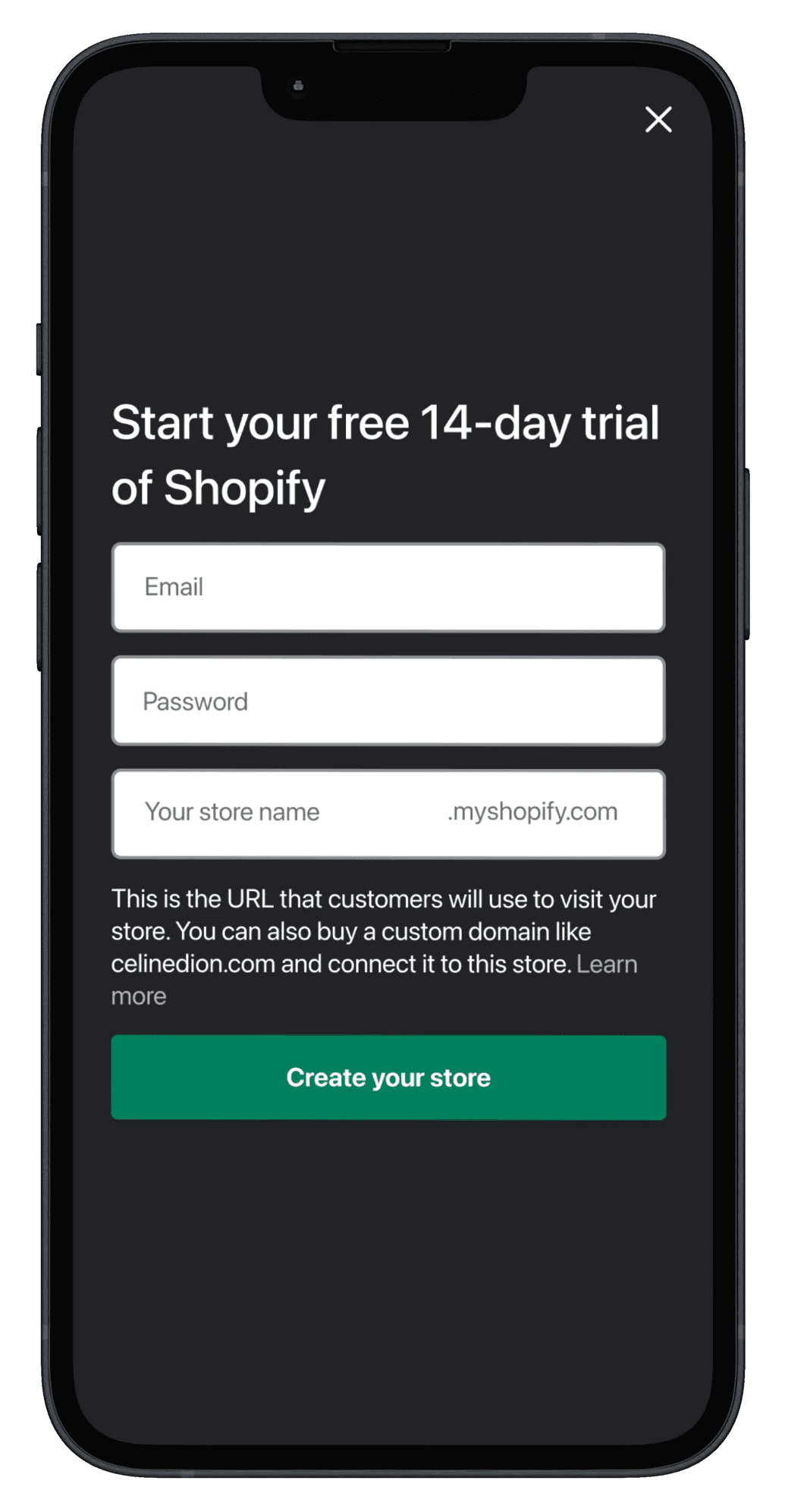
50% dropoff on the first step of signup
Improving signup was a top growth-priority.

Early high-effort question
Too early to ask for store name.
Password field
Leverage existing work and optimize signup experiment for speed.
Account creation hosted on marketing website
Unable to add authentication features (i.e. Sign up with Google) and spam mitigation features (i.e. Captcha)
Mobile sign-up
Typing and filling out forms require extra effort.
How might we reduce friction during the signup process to help get merchants started on Shopify?
Research & Ideation
As we began to ideate, we dug into past experiments, competitor analyses to identify some opportunities to investigate.
INTERNAL INSIGHTS

of participants chose to use social signup
(social & phone number concept test)

of signups come from gmail, across all pages
Convenience, better security, and not needing to create a password were drivers for social signup.
EXTERNAL INSIGHTS

agree they’re "more likely to return to a website that welcomes them via social login"

increase for signup on Android
(Case study from Pinterest)
Longer signup, better customer conversion due to investment.
Existing work
The Identity team has already rolled out the ability to connect a Shopify account to Google for Shopify employees.
Objectives
Defer high-friction steps
by splitting account creation and store creation
Improve mobile UX
by introducing social signup
Enable scalable experimentation
by unifying signup on Identity, unlocking the ability to experiment with the order of signup
Given what I learned, I approached the design with the following principles.
Speed
Leverage existing work and optimize signup experiment for speed.
Scalability
Future state will include supporting other popular providers like Facebook, Apple ID, WeChat etc.
Mobile
Mobile usage will increase over time so signup should reduce typing effort.
My Task
Simplify the account creation form in Identity & add Google signup
- Question everything
Why is the current state the way it is?What are the constraints?
- External research
What are competitors doing? What are best practices for sign-up forms?
- Design
Iterate, iterate, iterate
- Handoff
Dev handoffManaging co-dependenciesNew requirements
- All aboard ship!
Current State
Creating an account on Identity
The existing account creation form on Identity was a fairly long form.

After some investigation with the team, I uncovered the history and constraints of the existing design.
First & last name
Suggested by legal team to encourage staff members to use their legitimate names to screen against sanctions watchlists.
Password confirmation
The Identity team were a very security-conscious team.
Manual term & conditions
Additional security, not mandatory.
Research
External benchmarks
3/16
competitors used password confirmation
25%
all users that abandoned signup form was due to the confirm password field (Research study)
3.6
average form field #
13/16
competitors showed login option
14/16
competitors used social signup
Design
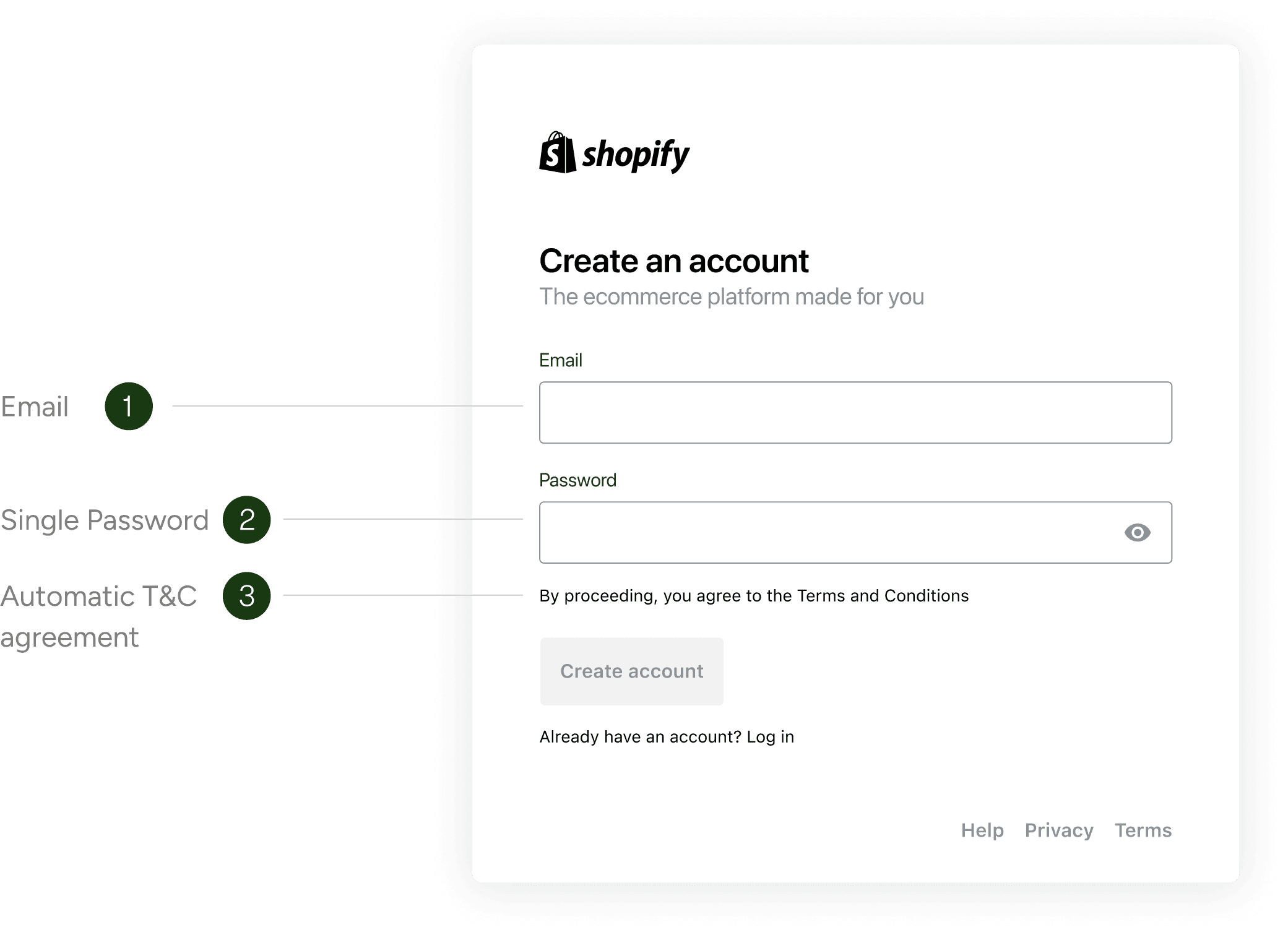
Simplify the account creation form
I influenced legal, security & development teams to move forward with the proposed design changes.
Adding Google signup
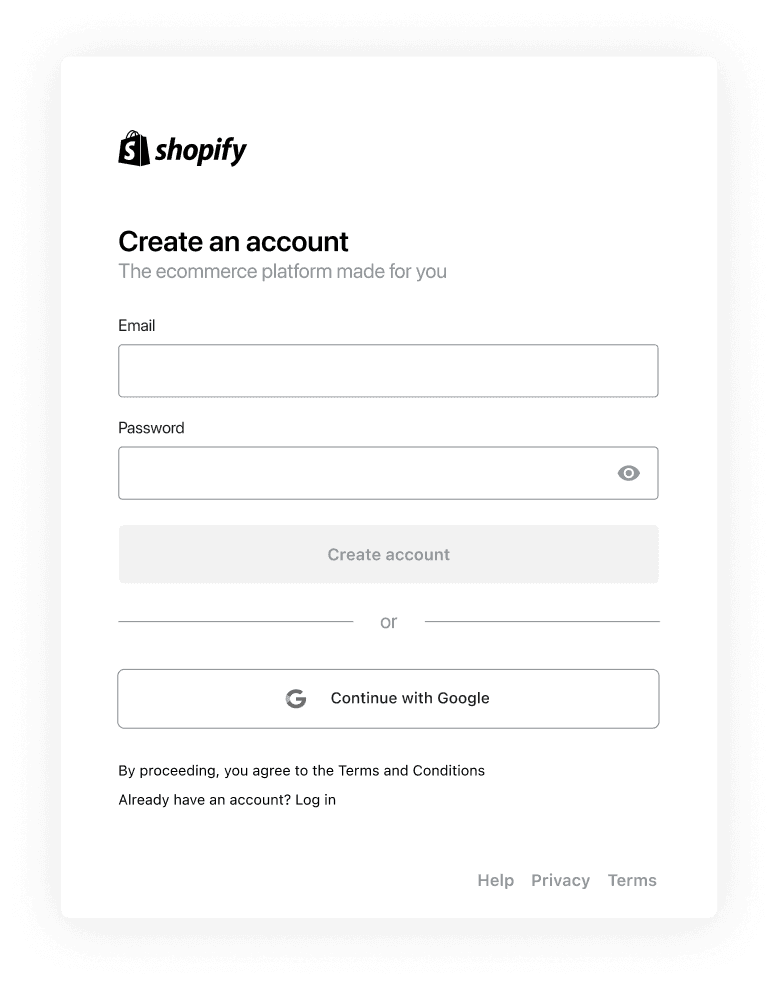
A1. GOOGLE SIGNUP/BOTTOM

Promotes email signup
Task-efficient
More visual clutter
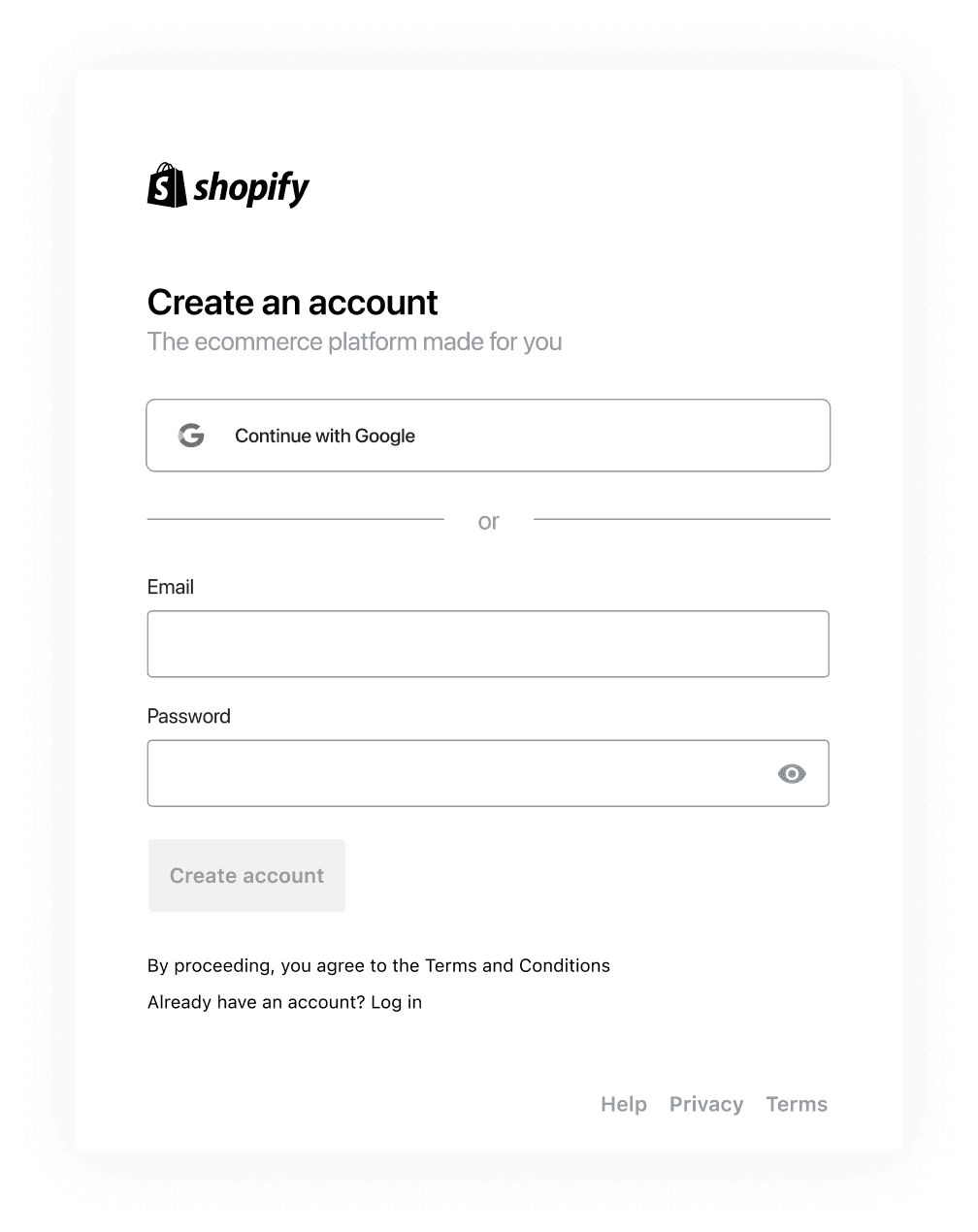
A2. GOOGLE SIGNUP/TOP

Promotes Google signup
Shopify brand dilution
More visual clutter
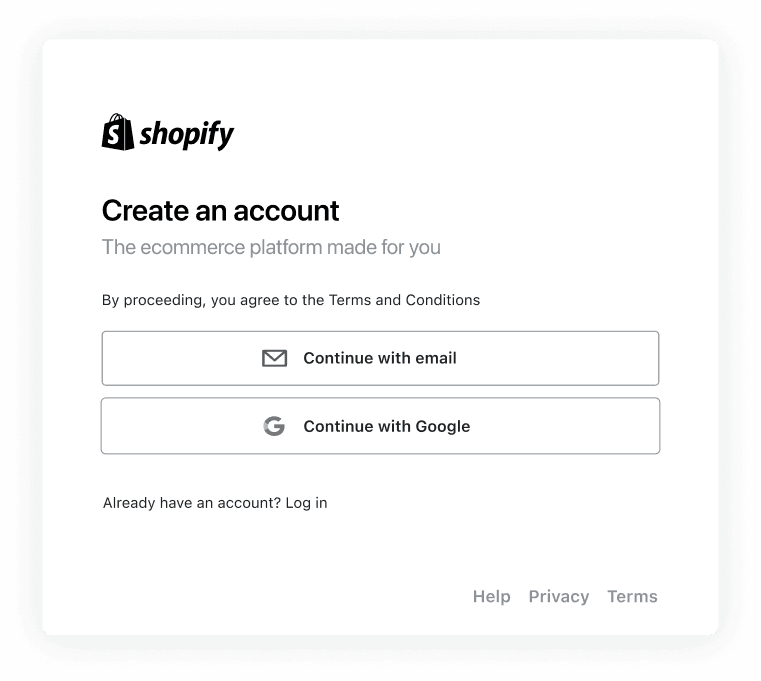
B. SIGNUP PATHWAYS

Less visual clutter, focused experience
Scalable
Extra step for email signup
For the sake of the experiment, we chose the first option since this was closer to the existing design. We didn’t want to skew results with more drastic changes.
Experiment Objectives
Measure how splitting account & store creation and Google signup impact conversion
Duration
4 weeks
Testing Type
Multivariate testing
Sample size
10% of users
# of variants
5 including control
Tracked Metrics
Account creation → Store name conversion
Completion time per screen
Drop-off at each stage
UX Delays
Before launching, the team ran into several roadblocks from the Identity team. I was actively involved in higher-level conversations advocating for my designs, usability, and business goals, while finding solutions for technical constraints.
Identity’s Rebrand
Call out a feature, benefit, or value that can stand on its own.

Advocated to keep “account”
Confirm email step
Adding an additional step in account creation via Google for email confirmation.

Managed concerns to keep flow the way without confirmation.
Important fields
First & last name, & password confirmation important for security.

Provided data-backed rationale & strategic foresight to remove those 3 fields.
Results
Key takeaways
+3%
users completing account creation (Google variants)
Google signup effectively converted more users to downstream steps.
-5%
decrease in shop creation
Shop name is still a significant source of friction regardless of where it is in the flow.
Next Steps
Ship Google signup
Experiment with removing store name
Continue experimentation!
My Impact
Redesigned the primary entry point for Shopify’s PLG motion
3 years later, an earlier iteration of the Google signup screen is now the default experience shown to every new Shopify user, a page that sees over 200,000k visits daily.

100%
of my designs shipped to 100% to Shopify’s 2M+ users
3
of my experiment ideas were launched after my internship
7+
prototypes and visual assets built for gaining leadership approval